
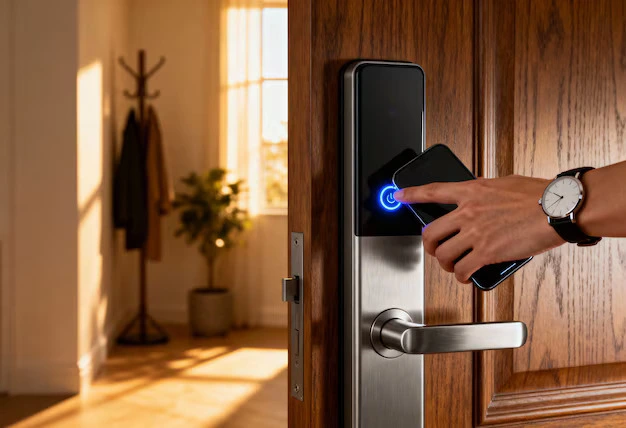
Biometric access control is generally more secure because it uses unique physical traits to verify identity. Key card access control can still provide strong security, but cards can be lost, stolen, or shared. The right choice depends on your building, security needs, budget, and how much control you need over access. Key Card Access Control and Biometric Access Control both promise to keep the wrong people out, but they work in very different ways, and each comes with its own strengths and weak spots. At Clever Cabling, we field this question almost every week, so we put together a clear, honest comparison to help you decide what actually fits your property.
Key Card Access Control uses a plastic card or fob loaded with a chip. Swipe it, tap it, or wave it near a reader, and the door unlocks. Every card can be programmed to open specific doors at specific times, so a cleaning crew might only get access after hours while managers get access all day.
Cards are simple to issue and simple to take back. Lose one, and a quick call to your provider deactivates it in seconds. That flexibility is a big reason so many offices, apartment buildings, and warehouses still rely on this method today.
Biometric access control skips the card entirely and reads something unique to a person’s body. Fingerprints, facial features, and even iris patterns get scanned and matched against a stored profile. Nobody can hand off their fingerprint to a friend the way they might hand off a key card, which is exactly why this method has picked up steam over the last several years.
Setup takes a bit more work upfront. Each person needs to be enrolled, and the hardware itself tends to cost more than a basic card reader. Once it’s running, though, the system checks identity in a way that’s tough to fake casually.
Cards can be lost, copied, or lent out. A coworker asks to borrow yours “just for a second,” and now two people have access with one card. Cloning technology has also gotten cheaper, so a determined intruder can, in some cases, duplicate an unprotected card without much trouble.
Biometric readers close that gap. Nobody can lend a fingerprint the way they lend a badge. Facial recognition and fingerprint scanning also leave a much cleaner audit trail, since the system logs exactly who walked through a door, not just which card was used.
None of this means cards are unsafe. Paired with good habits, like reporting lost cards right away and rotating access codes, Key Card Access Control still blocks the vast majority of casual attempts to get in. Biometric systems simply add another layer of protection, and the right Access Control Solutions can help you choose the option that fits your building and security needs.
Cost is where a lot of buildings make their final decision. Here’s a rough breakdown of what tends to drive the price on each side:
Smaller properties with a handful of entry points often lean toward cards for the lower price tag. Larger facilities with sensitive areas, like server rooms or labs, tend to find the extra cost of biometrics worth it.
Card readers are nearly instant. Tap and go, with almost no wait. Biometric scanners have improved a lot, but fingerprint and facial recognition still take a fraction of a second longer to process, and that gap becomes noticeable during a morning rush when dozens of people hit the same door at once.
For high-traffic buildings, some property managers install extra readers or extra scanners to spread out the flow rather than picking one system purely for speed.
Plenty of buildings run both systems side by side. A card might get someone through the front entrance, while a fingerprint scan controls access to a server room or a pharmacy storage area. Layering the two gives a property stronger protection without forcing every single door to carry the higher cost of biometric hardware.
Our team at Clever Cabling often recommends this hybrid setup for clients who want strong security in sensitive zones without overspending on every entry point in the building.
Neither system wins in every situation. Cards keep costs down and doors moving quickly, while biometric scanners close the gaps that cards leave open. Most properties end up somewhere in between, using cards for general access and biometrics for the areas that truly need tighter control. Clever Cabling has helped plenty of clients work through this exact decision, and the right answer almost always comes down to the size, traffic, and sensitivity of the space in question.
Picking between cards and biometrics gets a lot easier with someone who’s wired both systems into real buildings. Reach out to Clever Cabling for a walkthrough of your space, a straight answer on what fits your budget, and a quote before any work begins. Call us or send a message through our contact page, and we’ll get back to you with next steps.
Contact us to discuss your access control needs. Email info@clever-cabling.ca or call +1 (647) 953-1782 for expert guidance.
Is biometric access control more expensive to install?
Yes, typically. Biometric hardware costs more per door than standard card readers, and enrollment takes extra time. Larger properties feel this cost increase more than smaller ones, though maintenance expenses often balance out over several years of use.
What happens if a biometric scanner fails to recognize someone?
Most systems allow a backup method, such as a PIN code or a manager override. Poor lighting, dirty sensors, or minor injuries can occasionally cause a misread, so a reliable fallback option keeps doors from becoming a daily headache.
Can lost key cards be deactivated remotely?
Yes. A quick call or a few clicks in the management software deactivates a lost or stolen card almost instantly. Key Card Access Control makes this process fast, which limits the window of risk after a card goes missing.
Is fingerprint data stored by biometric systems safe from hacking?
Reputable providers encrypt fingerprint data and store it as a template, not a real image. That makes stolen files far harder to misuse. Always confirm encryption standards with a provider before trusting a system with sensitive data.
Which system is faster for high-traffic entry points?
Card readers generally process people quicker than biometric scanners, especially during busy morning rushes. Facial recognition has closed the gap somewhat, but tap-and-go cards still edge out fingerprint or iris scanning for raw speed at doors.
Can biometric access control be fooled by photos or fake fingerprints?
Older or budget systems sometimes can be tricked. Advanced biometric access control includes liveness detection, which checks for things like blinking or skin texture, making photos and moulded fingerprints far less effective against current hardware.
Do key cards work during a power outage?
It depends on the setup. Battery backups keep most card systems running through short outages, though extended power loss can disable both cards and biometric scanners unless the building has a generator or uninterruptible power supply installed.